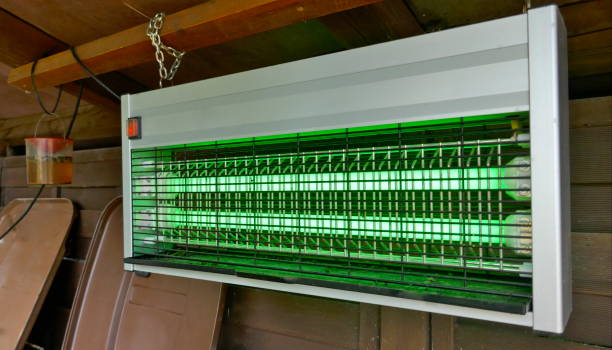
Every evening, a mass murderer stalks the darkness of America’s suburbs. An eerie blue glow lures hapless victims from their properties. The doomed souls, mesmerized by the light, throng to their deaths in scorching blasts of electricity. I’m speaking concerning the bug zapper. Many individuals use the gadget to rid themselves of mosquitoes and other pests. “Kill flies, mosquitoes, gnats, and wasps,” touts Black and Decker. Flowtron will assist eradicate flying pests over as much as “2 acres” for simply $315. Another advertises itself as an “eco-friendly” strategy to “instantly kill” mosquitoes. The problem? None of those claims are true, scientists say. In actual fact, bug zappers make it more seemingly you’ll be bitten by mosquitoes whereas sitting in your yard. “When it involves mosquitoes, bug zappers don’t work,” says James Fordyce, an entomologist on the University of Tennessee at Knoxville. Bug zappers are exceptional killers of bugs - just not the ones that chew you. Among the thousands of insects these devices electrocute every evening, almost all are harmless.
(Image: https://media.istockphoto.com/id/1041785156/photo/electric-fly-and-insect-killer-with-green-uv-lamp-reliably-protects-from-insects.jpg?s=612x612&w=0&k=20&c=_5VIOrYzv0tNt-O21Qnnz-5p3rBbc5aasNEjE4uChbE=)One study estimated even a fraction of the bug zappers bought in the United States kill greater than 70 billion insects yearly - with no discernible impression on mosquitoes or different biting insects. This pointless slaughter of local insect populations may be hastening the decline of species, the insect apocalypse. I talked to experts about why bug zappers are a very dangerous thought to eliminate mosquitoes - and what works as a substitute. Bug zappers purport to work by attracting mosquitoes, sometimes using a lightbulb that emits ultraviolet light, or generally carbon dioxide or chemical bait. Yet research show just about no mosquitoes or webpage different biting insects ever enter a zapper. In 1997, bug zapper the University of Florida’s medical entomological laboratory tallied the demise toll from one bug zapper over a single night time: webpage 10,000 insects. Just eight were mosquitoes. Similar research mirrored those findings. Around the identical time, researchers at the University of Delaware used a bug zapper to trap 13,789 insects over a summer season.
Only 31 - 0.22 percent - have been biting insects such as mosquitoes and gnats. What did it kill? Beneficial bugs, principally. Roughly half the victims - 6,670 insects - were harmless aquatic species from close by rivers and streams, fish food in the aquatic food chain. Lots of the others have been parasitic wasps and beetles that naturally prey on mosquitoes. Mosquitoes are usually not fooled by zappers as a result of, together with different bloodsucking insects, they have advanced to residence in on animals’ exhaled carbon dioxide, not ultraviolet mild, webpage scientists say. Even if mosquitoes are drawn in by a bug zapper, they'll immediately redirect their consideration to their favorite foods: warmblooded mammals, especially people. And Colorado State University’s extension service has reached the identical conclusion: “No controlled scientific study has shown that these gadgets scale back mosquito biting rates outdoors,” it states on its webpage.