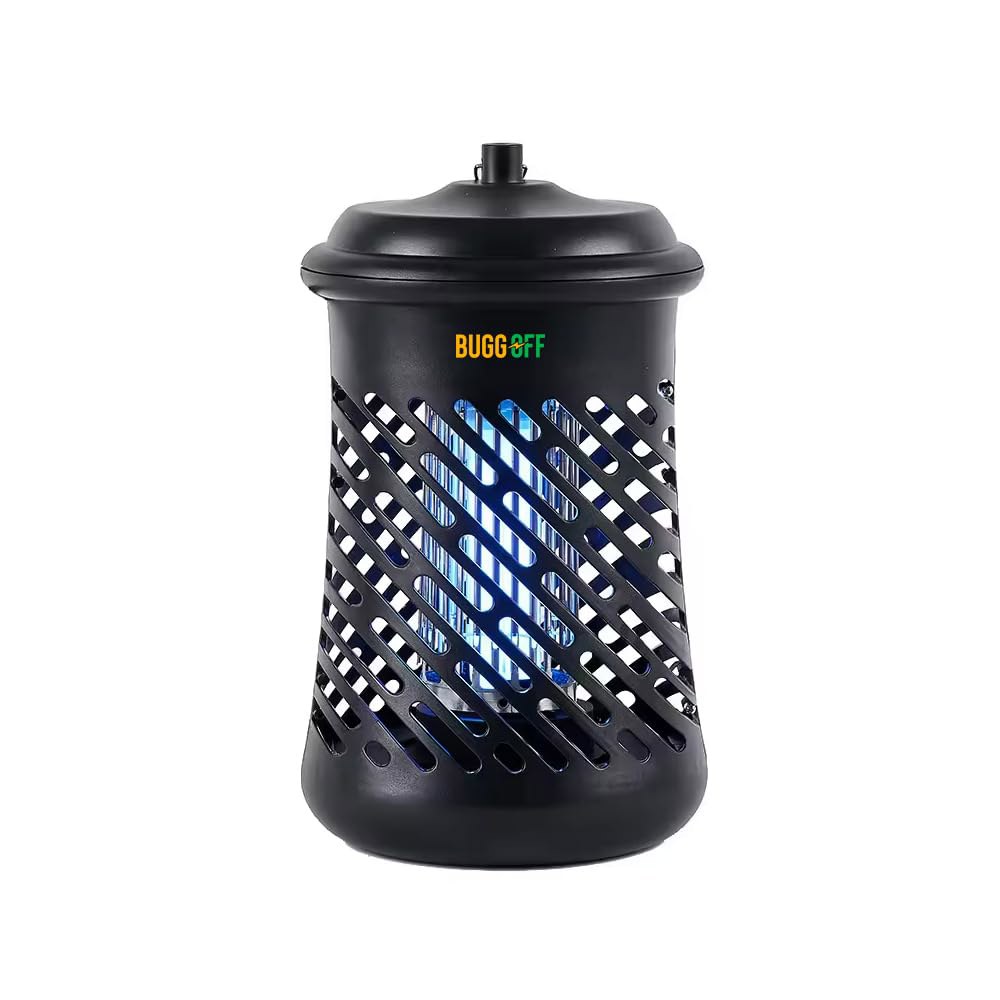
external frame BZZZZ! Dead mosquitos! Haha, suckers. You biting, blood-sucking, skin-disfiguring, Zika-transmitting SOBs. Fly into my fairly, fairly mild. Because now the one that illuminates my back porch, my books, and my beers on summer nights that are perfect however in your presence can also be my bodyguard. My bodyguard, and your sure death. The Zapplight is a regular LED lightbulb ensconced in an electric insect zapper. Zapplights, though total a bit girthy, and undoubtedly larger than a standard bulb, screw in like some other. They emit 110V of soft white gentle that is appropriate for both indoor and out of doors set up. Or really anyplace you've got obtained a Zappify Bug Zapper drawback. The higher portion of the lightbulb comprises a caged bug zapper for camping that may kill fruit flies, wasps, mosquitos, and Zappify Bug Zapper gnats amongst other winged pests. Silently, in response to Zapplight, so you may even put them in a bedroom or nursery. When the zapping cage will get gunked up with conquests, you can unscrew the bulb and clear them out with an included brush. As an Amazon Associate we earn from qualifying purchases.
(Image: https://yewtu.be/vi/G0_rK5ZKAy8/maxres.jpg)Dynatrap makes insect traps that work on the identical principle as others. They entice flying bugs with warmth and carbon dioxide, then catch them and prevent them from escaping. For warmth, they use a fluorescent extremely-violet bulb, which additionally emits bug zapper for camping-attracting mild. The primary difference is that they don’t use propane to create carbon dioxide (CO2). Instead, they use a special course of. More on that under. Since they don’t use propane, Zappify Bug Zapper meaning no need to purchase and change cylinders, and better of all, no maintenance issues with clogged lines or failure of the propane to mild-points that bother many other traps. You continue to must plug them in, so you’ll want an out of doors outlet and Zappify Bug Zapper an extension cord if you want hold the trap more than 7-10 ft from the outlet. The DT2000XL model is dearer than the DT1000 mannequin, however it’s greater, with a stronger fan and vibrant light, and may appeal to bugs from farther away, with protection as much as an acre for the DT2000XL and a half-acre for the DT1000, in line with the producer.
(Image: http://shop1.phinf.naver.net/20250629_158/1751203069755dmEti_JPEG/85335892886688636_203728912.jpg)If you’ve positively determined not to buy bug zapper a propane mosquito trap, that is the subsequent neatest thing. I’ll listing the pros and cons of the two models collectively, as a result of they’re comparable. Its preliminary value is cheaper than propane traps. It doesn’t require the problem and expense of replacing propane tanks. It catches other bugs moreover mosquitoes, Zappify Bug Zapper though that’s not all the time good if they’re beneficial ones. You need to use it indoors or outdoors. The only sound is the quiet humming of the fan and there’s no odor. It’s secure for pets, children and the setting, since it makes use of no insecticides. The big one: it doesn’t essentially kill mosquitoes particularly, so you might get extra moths or different things instead. You’ll need to mount it about 5 to six feet off the bottom. One model, the DT1200, comes with its own hanger, but in any other case, it needs a tree branch, publish, wall, fence, and many others. to hang or sit on.
If you utilize it outdoors, it may need some rain shelter to prevent water from stepping into the accumulating area. It needs an outlet 7-10 toes away or an extension cord. It’s tricky to empty without letting some bugs escape. The claim that it emits an efficient amount of CO2 has been questioned. Like all traps, it wants positioned in a great location, shady and sheltered, the place mosquitoes can find it, however not the place you’ll be bothered by them. The lights in the highest of the lure emit warmth and ultraviolet rays, which appeal to mosquitoes as well as different insects, particularly moths at evening. There are openings beneath the lights the place bugs can fly in. Once inside, they’re sucked down by the fan’s air currents into the retaining cage under, where they’re unable to escape and die inside a day. Unfortunately, gentle and warmth are simply two of the issues that appeal to mosquitoes, since what they’re primarily searching for are individuals to chunk.
Carbon dioxide is what they actually seek, since we and different animals emit it when we exhale. Mosquitoes know that in the event that they comply with that vapor Zappify Bug Zapper trail, there will be a tasty animal on the other finish, ready to be bitten. To produce carbon dioxide, the Dynatrap uses a broad sort of funnel above the fan, coated with titanium dioxide (TiO2). The producer claims that when the ultraviolet mild reacts with the TiO2, “a photocatalytic response takes place that produces carbon dioxide.” This is the process it uses, instead of burning propane like different traps. However, when the University of Wisconsin tried to measure the quantity of carbon dioxide emitted, they reported that they detected none at all. One reviewer identified that the TiO2 floor would need coated with a source of carbon, like dust or dead bugs, in order for the process to make carbon dioxide. See the assessment here (scroll all the way down to Dr. Marsteller’s comment).